
If your Child or young adult has a mental health crisis and you visit Niagara health, there is a set protocol for what will happen. They vary by the age of the child/young adult. In children up to age 17 and 364 days your child will go through a slightly different protocol. A person aged 18 will go through the same protocol but in a specialized unit of the emergency department called PES or (PERT) which is a locked unit, whereas a child will
be kept in a specialized pod of the emergency department watched by a security guard until they are admitted at which point they will be brought to the children’s unit of the hospital or transferred to McMaster Children’s Hospital in Hamilton.
The Process looks like this: When you arrive at the hospital (St Catharines) you will be triaged and registered like every other patient after which you will be brought to your respective holding area (emerge for kids and pes/pert for adults). A nurse will take your history and detail your symptoms. You will then wait to see a doctor who will decide if you need to see a psychiatrist or can be discharged. From there you will likely see a medical
student who will then see you with the psychiatrist. They will make the final determination of whether you arrive at an inpatient unit/transfer or are discharged.
Important things to know.
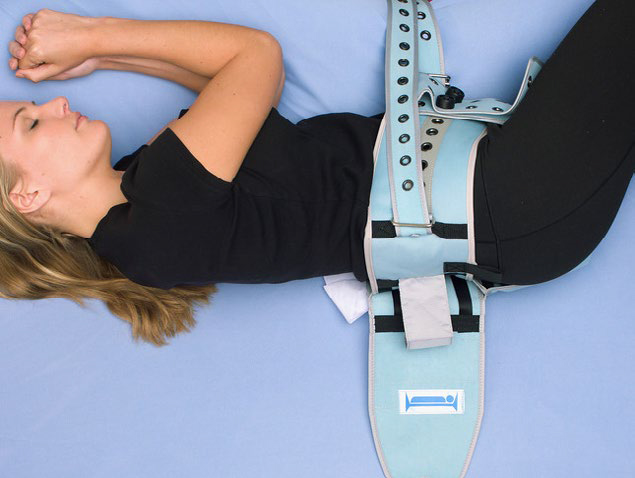
You will be searched and anything potentially dangerous will be held from you this includes pens, lighters, scissors, knives, needles, dental floss, hoodies with strings or pants with strings and etc. If You become violent you will likely be restrained using a system called the Pinel De-restraining system
pictured below. This will take place with 3-4 security guards and 3-4 nurses or more. You will also likely be given medication against your will. I have written a detailed article on restraints for you to review. This system is made of Kevlar (same material in bulletproof vests) so you won’t be able to break it. In the event your headbanging the hospital may have a special lockable helmet to stop you from hurting yourself otherwise you will be restrained. Once a decision has been made you will be transferred to a unit or in the case of children to McMaster
Children’s Hospital
Unfortunately, in the area of mental healthcare restraints is a necessary evil. But what does restraint mean, you don’t want to see your child hurt, or traumatized you just want to get your child help. Fortunately, I can answer what the likely scenarios are, and I have detailed
this below. When it comes to restraint there are 3 types: Physical, Chemical and Mechanical. In the Niagara Health System physical is rare, but chemical and mechanical are used frequently, so let’s give you the information you need.
Physical Restraint-:
Physical Restraint is hands on where your child will be held down into the mattress or placed in a basket hold. The former is more likely but only to initiate Mechanical and Chemical Restraint. A basket hold is only likely for toddlers and very young children.
Chemical Restraint-:
Is usually an injection of a antipsychotic and benzodiazepine normally Haldol 5mg/2mg Ativan or 5-10mg of Olanzapine with 2 mg of Ativan. Both can be taken orally and if your child is in a position where they can be offered the oral route as long as they are not a severe safety risk. This medication will make your child sleepy and will calm them down. This medication is almost a certainty if your child is being violent or hurting themselves.
Mechanical Restraints:
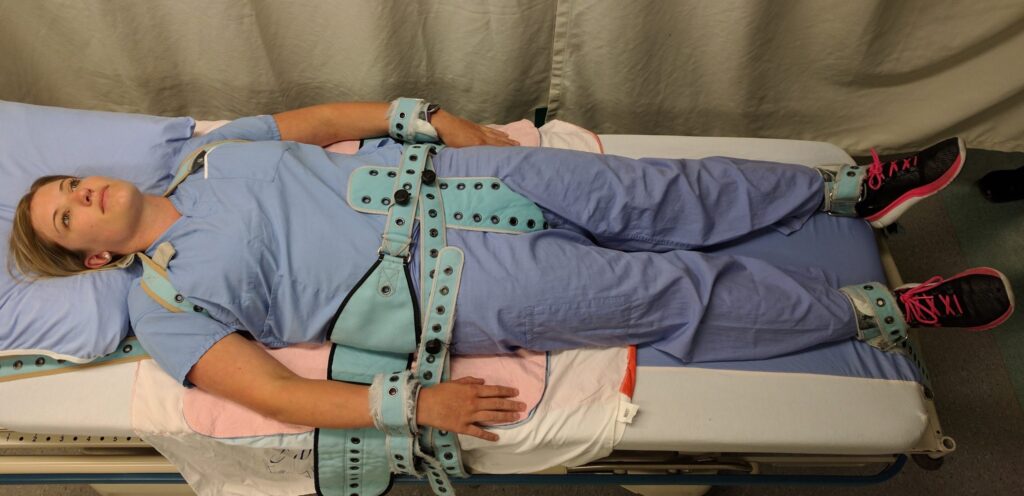
This involves securing your children’s wrists and ankles as well a pelvic strap over the lower part of your child’s stomach and groin to the bed frame immobilizing them, they will then be given medication. This process happens quick and by about 4 nurses and 4 security
guards. It takes only 30-60 seconds for this to be done. This is a last resort, but they are necessary if your child is a danger to himself or others
Another form of restraint is a special lockable helmet to minimize risk of headbanging behaviour. For more detailed information on mechanical restraints please check out the Pinel Restraint Article.
-Jacob Galipeau December 7, 2025-
Copyright © 2025 All Rights Reserved
info@nancywillarossfoundation.com